Printing a poster?
Print it at any size. The PDF is vector, so it stays sharp even huge, and the white border fits any paper without cropping. Just set your printer to Fit (not Fill or Stretch).
Sending it to a print shop? Tell them: any size, scale to fit, keep the proportions, don't stretch.
Resilience
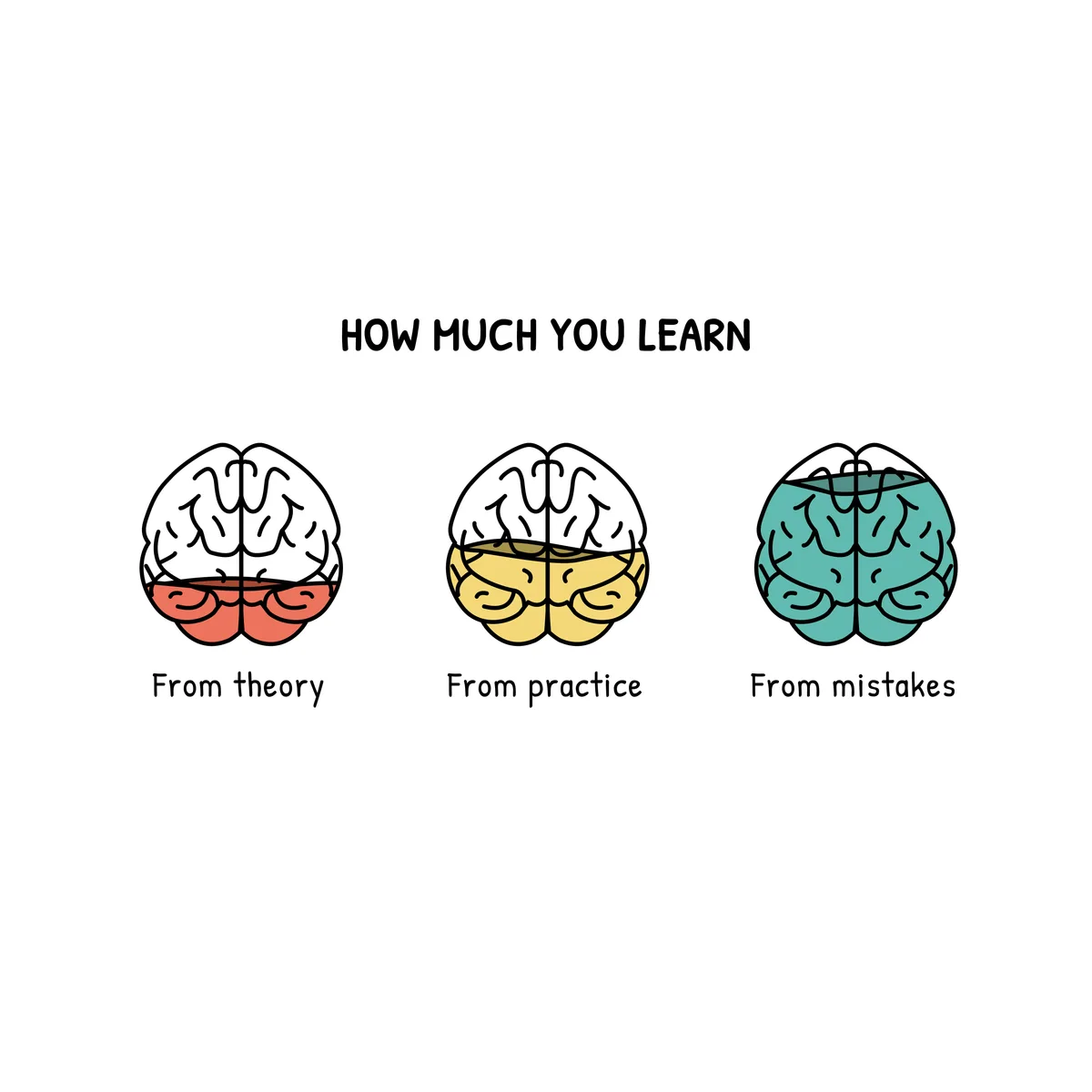
How Much You Learn
The brain that has failed knows something the others do not.
Student outcome focus
Students reframe mistakes as learning events rather than evidence of failure, develop the habit of reflective questioning after difficult experiences, and build tolerance for imperfection as a necessary part of skill development.
Discussion questions
Think about learning to ride a bike or tie your shoes. Did you get it right the very first time? What happened in between?
Grades 3-4
When you make a mistake in class, what does it feel like in your body? Does this picture change anything about that feeling?
Grades 3-5
What is something you are not good at yet? What is one mistake you could make on purpose this week to get better at it?
Grades 4-6
There are more than these three. In the full collection you set your grade and the right questions load for you automatically. All of them, for every grade, are in the Adapt it tab below and in the playbook.
In advisory / homeroom
Tips from the classroom
- Before showing the visual, ask students: "Where do you think most of your learning actually comes from?" Collect answers first, then reveal the image. The gap between what students expect and what the visual shows is the entry point for the conversation. Create a classroom phrase: "teal brain moment." When a student makes a mistake in discussion or on an assignment, name it as that. Over time, students begin to use it themselves, which changes the emotional valence of getting things wrong.
- Pair with a brief written reflection after any assessment: "What is one thing I got wrong? What does getting it wrong tell me that getting it right could not?" Two sentences. Done in two minutes. High yield over time.
- Ask students: "Think of someone you consider genuinely skilled at something. How much of that skill came from theory, how much from practice, and how much from mistakes?" This moves the visual from abstract to biographical.
- Use at the start of a challenging new unit to set expectations. "This unit is going to produce a lot of teal brain moments. That is not a problem. That is the plan." For students who struggle with shame around mistakes, the visual offers a way to talk about past failures without reopening wounds directly. "If we applied the three-brain model to that experience, where would it land?" is easier to answer than "How did it feel to fail?"
More on the idea
Theory fills a little. Practice fills more. Mistakes fill the most.
The visual shows three identical brain outlines, each with a different colored lower section. The first brain has a small red-filled lower portion, labeled "From theory." The second has a larger amber-filled area, labeled "From practice." The third is nearly full in teal, labeled "From mistakes." The image makes a simple, powerful argument without words: the brain most activated by learning is the one that has encountered something that did not go as expected. Failure is not the opposite of learning. It is the condition that makes the deepest learning possible.
Questions by grade
Think about learning to ride a bike or tie your shoes. Did you get it right the very first time? What happened in between?
Grades 3-4
When you make a mistake in class, what does it feel like in your body? Does this picture change anything about that feeling?
Grades 3-5
What is something you are not good at yet? What is one mistake you could make on purpose this week to get better at it?
Grades 4-6
Look at the three brains. Which one has the most color? What does that tell you about where learning comes from?
Grades 6-7
Think of something you genuinely got better at. Did it involve making mistakes, or did you get it right almost immediately?
Grades 6-8
Why do you think mistakes produce more learning than just reading or watching? What happens differently in your brain when something goes wrong?
Grades 7-9
Is there something you have been avoiding trying because you were afraid of getting it wrong? What might that avoidance be costing you in terms of learning?
Grades 8-10
If mistakes teach more than theory, why does our school system often treat mistakes as something to be minimized or hidden? What would a classroom look like that treated them as the main event?
Grades 9-11
Describe a specific mistake that changed the way you think or work. What did smooth success in the same area teach you by comparison?
Grades 10-12
Think of the most significant academic or professional mistake you have made since starting college. Using the three-brain model, what did that experience teach you that no lecture or textbook could have produced?
College / Univ.
By language level
- WIDA Level 3 (Developing)
- Use frames: "A mistake I made was ___." / "I learned ___ from that mistake." / "The brain that learned the most is the ___ brain because ___." Students identify which brain matches a personal experience and complete one sentence.
- WIDA Levels 4-5 (Expanding / Bridging)
- Students write or discuss a specific learning experience using all three categories: "I learned something from theory when ___. I learned more from practice when ___. I learned the most from a mistake when ___." The framework gives structure to personal reflection without requiring fluency in abstract academic vocabulary. Visual Advantage for ELL Students: The brain silhouettes with color fill communicate hierarchy without requiring any language. The image is self-explanatory: more color means more learning. For students who have experienced failure as shameful in a second language context, this visual can be quietly powerful. It says that the brain struggling hardest to make sense of something new is exactly the brain that learns most.
In other settings
- Advisory / Homeroom
- Use after any assessment or project debrief. Ask students to name one thing they got wrong and one thing that mistake taught them. Collect responses anonymously and read a few aloud. The visual provides the frame that makes this feel safe rather than exposing.
- School Counseling
- Use with students who catastrophize mistakes or shut down after failure. The three brains reframe what happened: "Look at which brain this put you in. You are actually in the best possible learning position right now." The image makes that reframe visual rather than abstract.
- SPED / Resource Room
- Use to build a regular "mistake of the week" routine. Students share one thing that did not go as planned and what they noticed from it. Over time, this builds metacognitive reflection habits that support executive function and self-regulation goals within IEP plans.
- ELL Classroom
- Use explicitly to validate the productive confusion of language learning. "Every time you use a word wrong and I correct you, that is the teal brain. That is the brain learning the most." Framing language errors as the highest-yield learning events changes the emotional stakes of speaking imperfectly.
- Higher Ed / University
- Use in first-year seminars, academic recovery programs, or with students after a significant academic setback. The three-brain model reframes failure as the highest-yield learning event, which can shift the emotional meaning of a failed exam or missed opportunity without minimizing how hard it was.
CASEL social and emotional learning1
- Self-Awareness
- The three-brain visual makes visible something students often feel but cannot name: that the experience of getting something wrong leaves a mark that correct performance does not. Naming the hierarchy of learning sources gives students language for their own development, which is foundational to self-awareness.
- Responsible Decision-Making
- When students understand that mistakes carry more learning value than smooth success, they become more willing to take reasonable risks and make decisions under uncertainty. The fear of being wrong is replaced by curiosity about what a mistake might teach. That shift changes how they approach problems.
Universal Design for Learning (UDL)
- Multiple Means of Representation
- The three brain visual communicates through volume and color rather than text. Students who struggle with reading-heavy content can engage with the core argument immediately: the brain with the most color is the brain that learned the most, and that brain belongs to the one who made mistakes.
- Multiple Means of Engagement
- The three-way comparison invites students to place themselves in the image. Which brain represents how they usually approach learning? Which brain do they want? That self-placement creates intrinsic motivation to reflect rather than being told to reflect, which is a fundamentally different engagement mode.
WIDA language development
- Levels 3-5 Scaffolded Access
- At Level 3, sentence frames scaffold the reflection: "I learned more when I ___." / "A mistake that taught me something was ___." At Levels 4 and 5, students can write or discuss a specific experience using the three categories as a framework. Note: the abstract distinction between theory and practice may require explicit teaching before the visual lands at lower levels.
Multi-Tiered System of Supports (MTSS)
- Tier 1 Universal / Tier 2 Targeted
- As a Tier 1 tool, this visual normalizes mistake-making across a full classroom, reducing the stigma that prevents students from taking academic risks. At Tier 2, it is particularly useful for students with perfectionist tendencies, fixed mindset patterns, or histories of school avoidance tied to fear of failure.
This week's line for parents
Paste it into your weekly email or newsletter. It says what the class looked at and gives parents one thing to ask at the dinner table, which is where it actually lands.
Three brains on our board this week, showing how much you learn from theory, from practice, and from mistakes. The mistakes brain is the biggest. When homework goes wrong this week, try: "Good. That's the big brain working."
Back-to-school night slides and conference half-sheets come with the full collection.
Get the collectionGoes well with
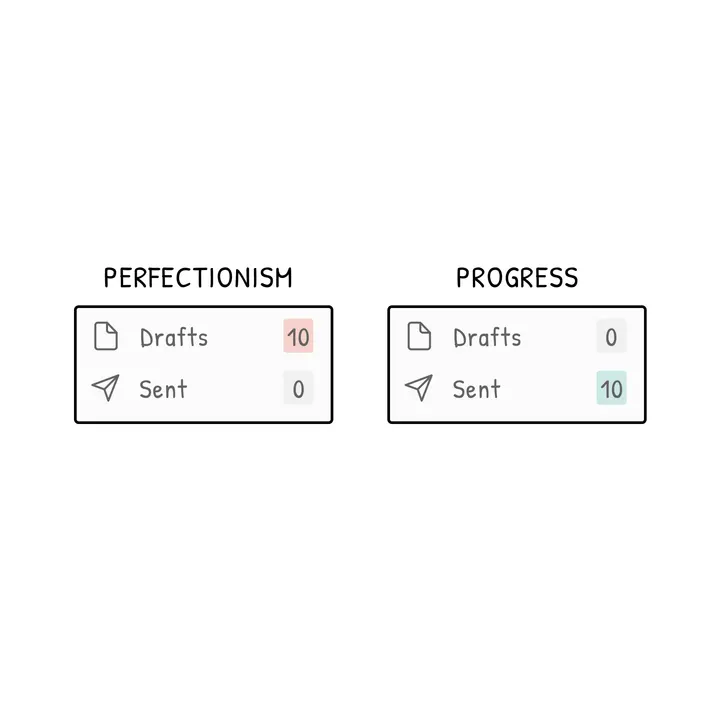
Perfectionism vs Progress
If students are beginning to accept that mistakes teach, Ugly Action might be a useful companion. It makes the specific argument that sent work, even flawed work, is where the learning actually lives. The Drafts folder and the red brain might be sitting in the same place.
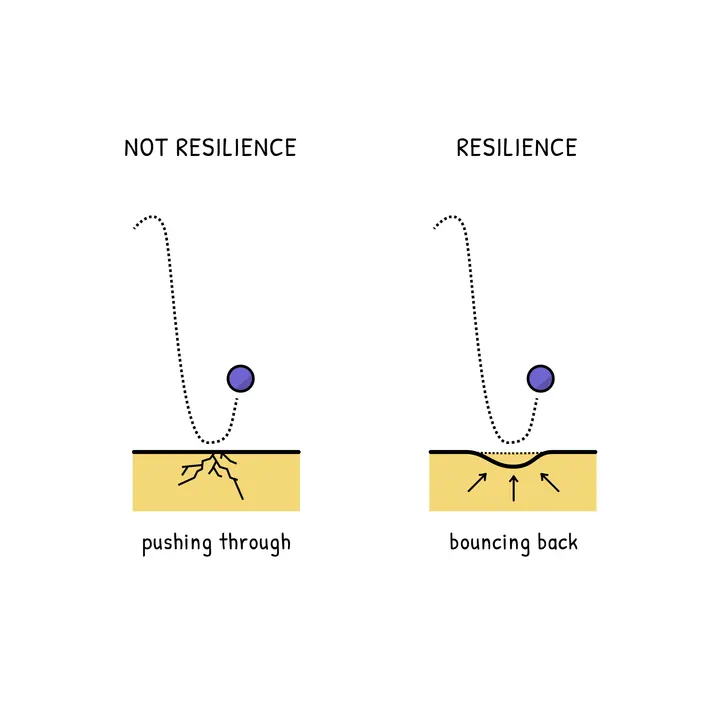
Resilience = Bouncing Back
For students who learn from mistakes intellectually but still feel the emotional weight of them, I Can't Do This, But You Did might be worth exploring. It separates processing the difficulty from being damaged by it. The teal brain fills up in the aftermath of difficulty, but bouncing back is what makes that possible.